WHAT SHE CARRIED
FIELD EXHIBITION DESIGN
ROLE IDEATION, CONCEPT, VISUAL DESIGN, FULL SCALE EXHIBITION STRUCTURE
COLLABORATOR NINA DETTMERS, LUCA PALANGA & ME
DURATION SIX WEEKS
LOCATION & YEAR SCHWÄBISCH GMÜND, 2024
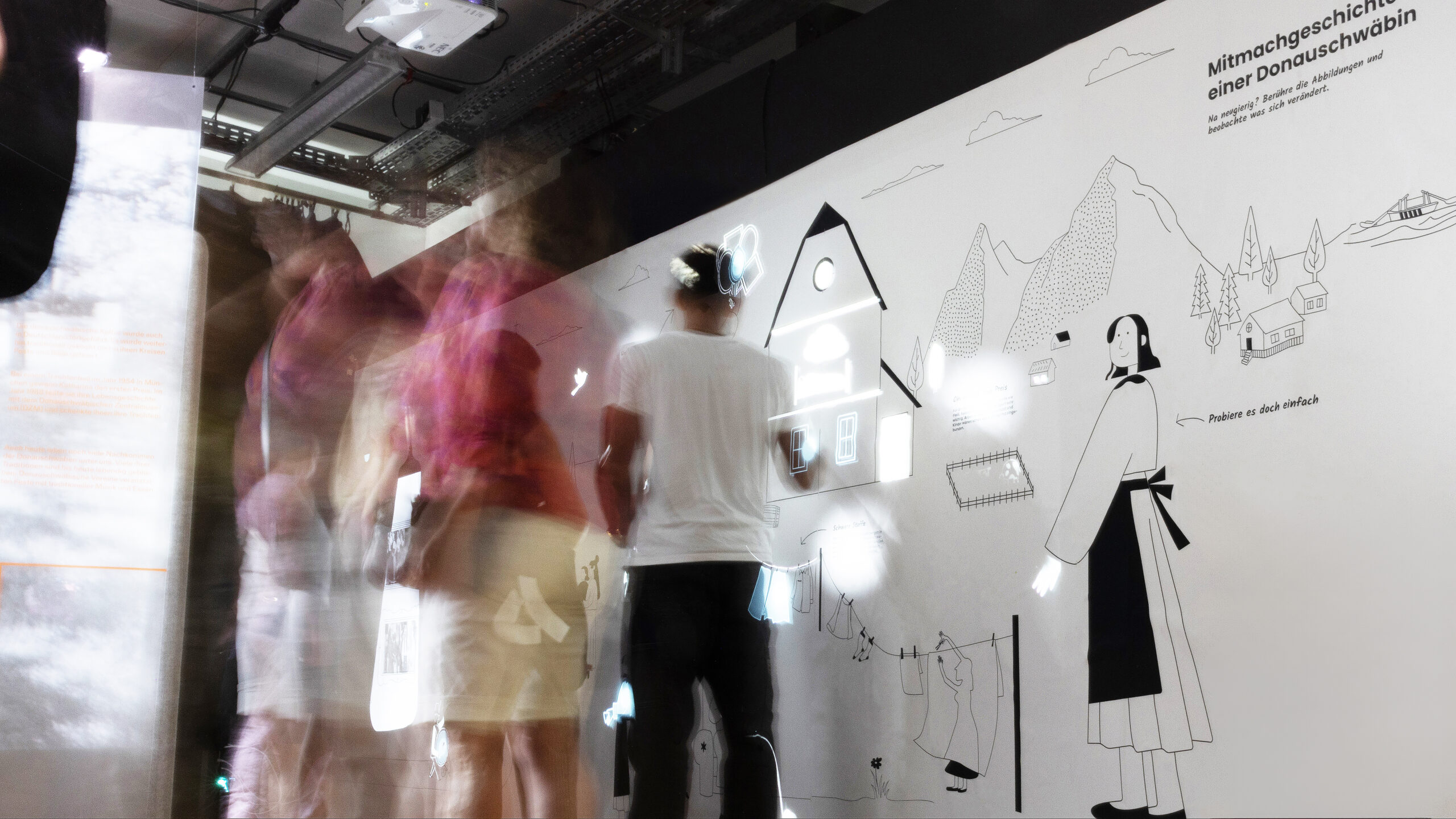
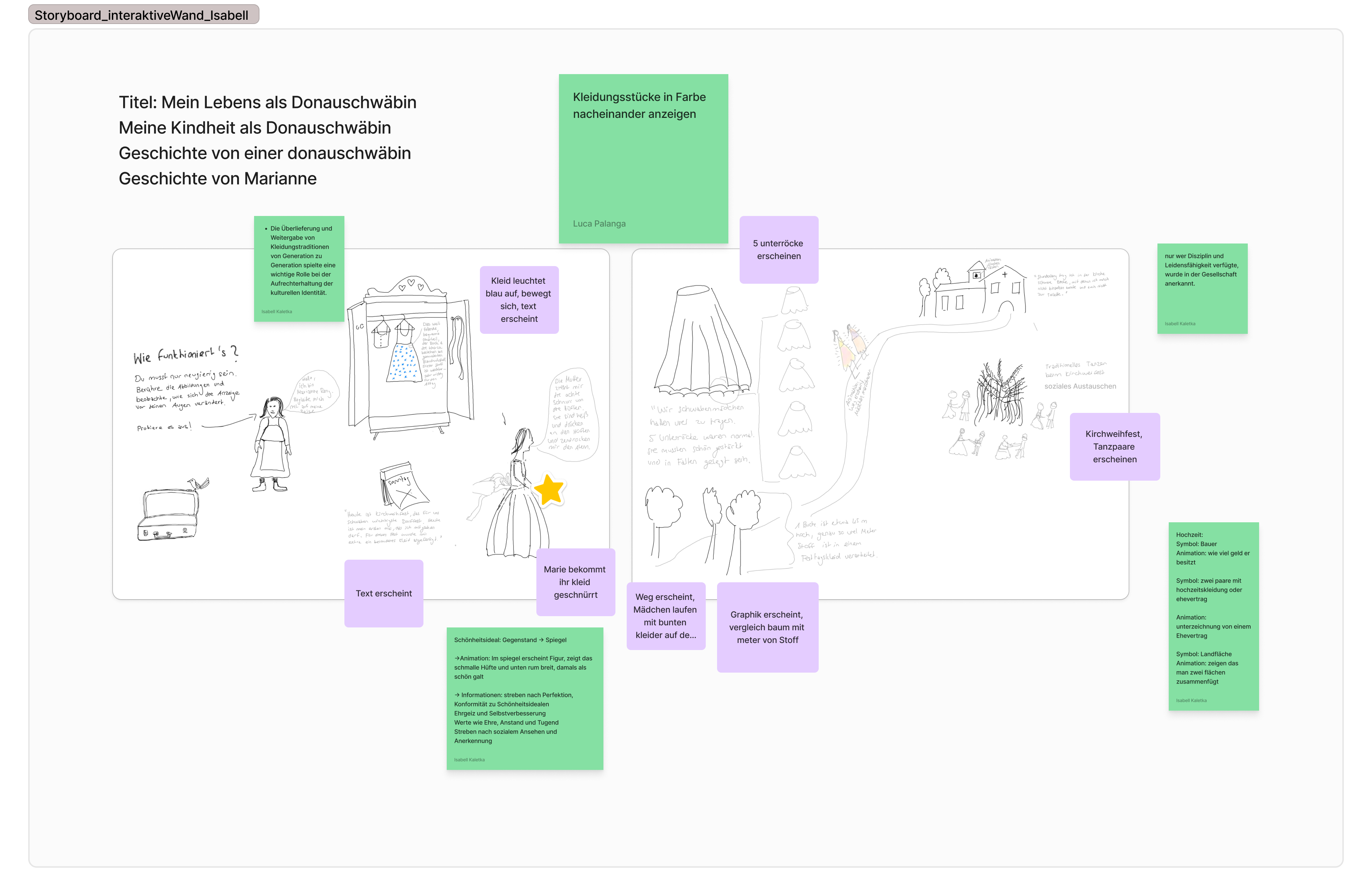
What She Carried” is an interactive exhibition about Marianne, a young Danube Swabian woman. The wall tells her fictional story, from her adolescence, when she wore the elaborate traditional dress for the first time, to her wedding day. Through a series of interactive stations, visitors discover the social ideals women were expected to embody and the physical challenges caused by the garments, which could weigh several kilograms and consisted of multiple starched underskirts.
The Exhibition
As part of the project, students from four degree programmes worked in interdisciplinary teams to develop media installations around the theme of “Enduring” in collaboration with the Danube Swabian Central Museum (DZM) in Ulm.
Our team explored traditional Danube Swabian clothing through an interactive exhibition. We focused on the visual presence and material complexity of the garments, translating their layered construction into an accessible exhibition experience.

The interactive Wall
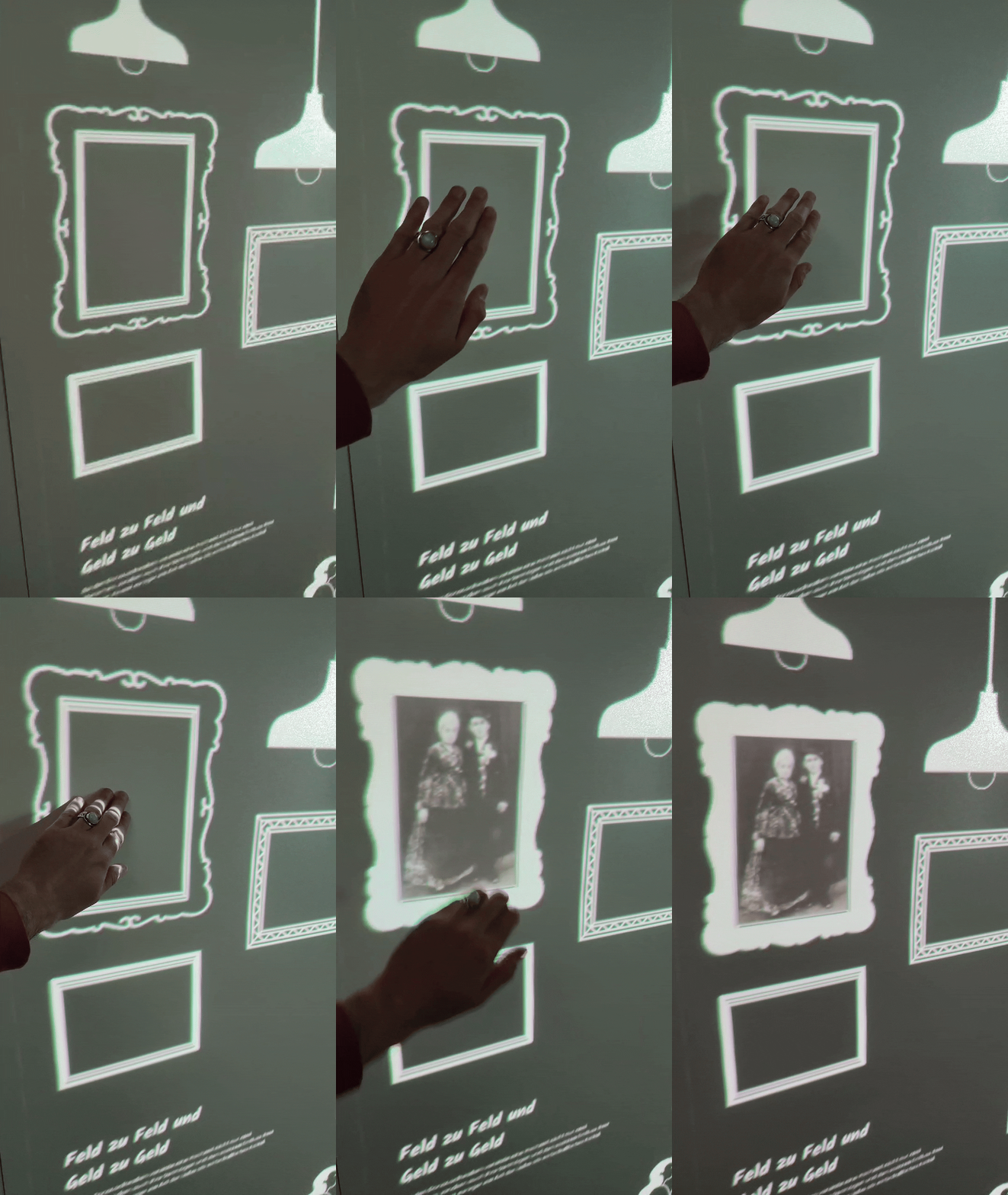
The interactive wall combines printed illustrations and texts with projected interactive elements. A projector highlights the points of interaction through pulsating blue circles, inviting visitors to actively engage with the exhibit. By touching these areas, visitors trigger either audio narratives by the protagonist, Marianne, or animated sequences. The story unfolds in a fragmented and personal way, allowing visitors to decide for themselves which stages and moments they want to explore.
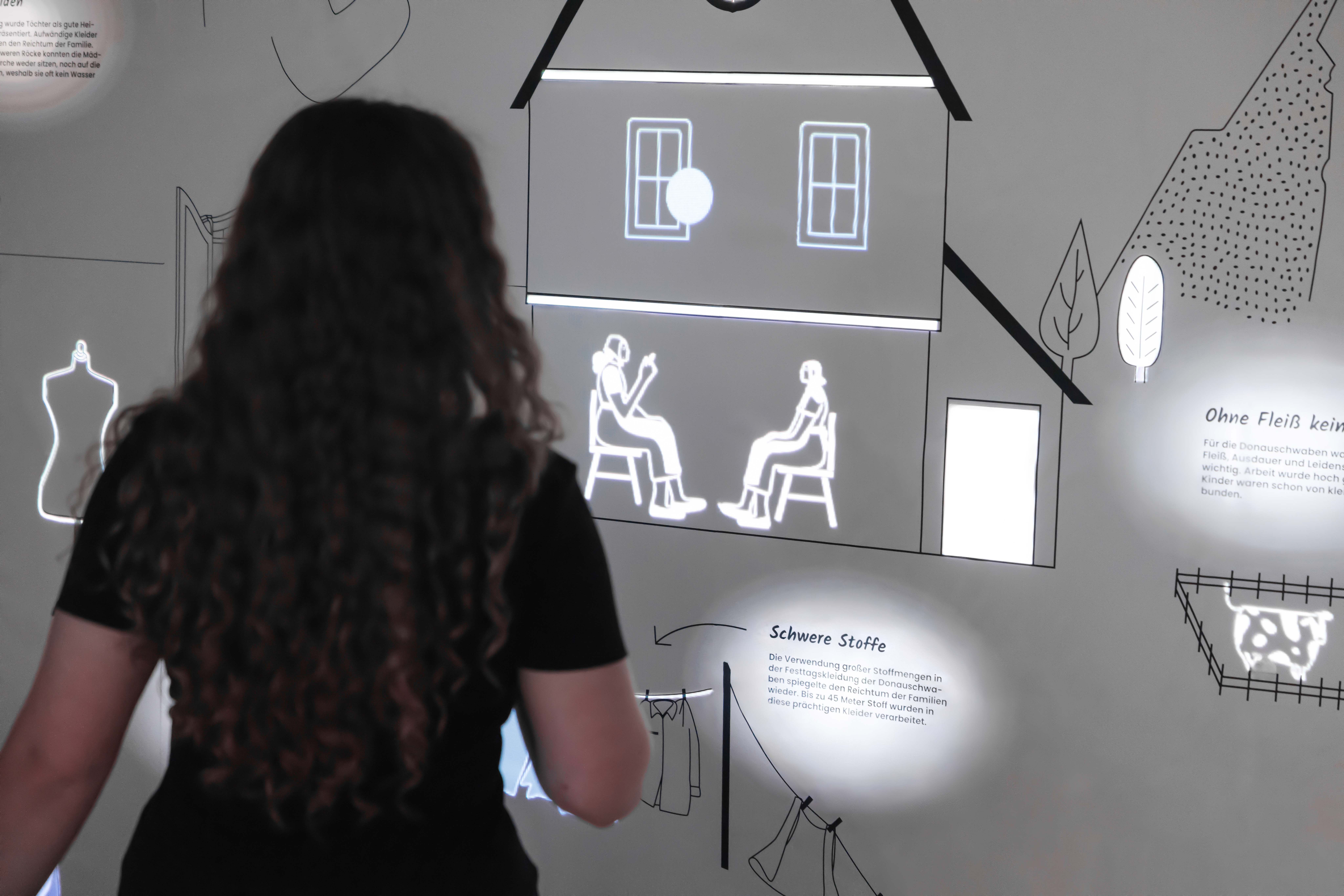
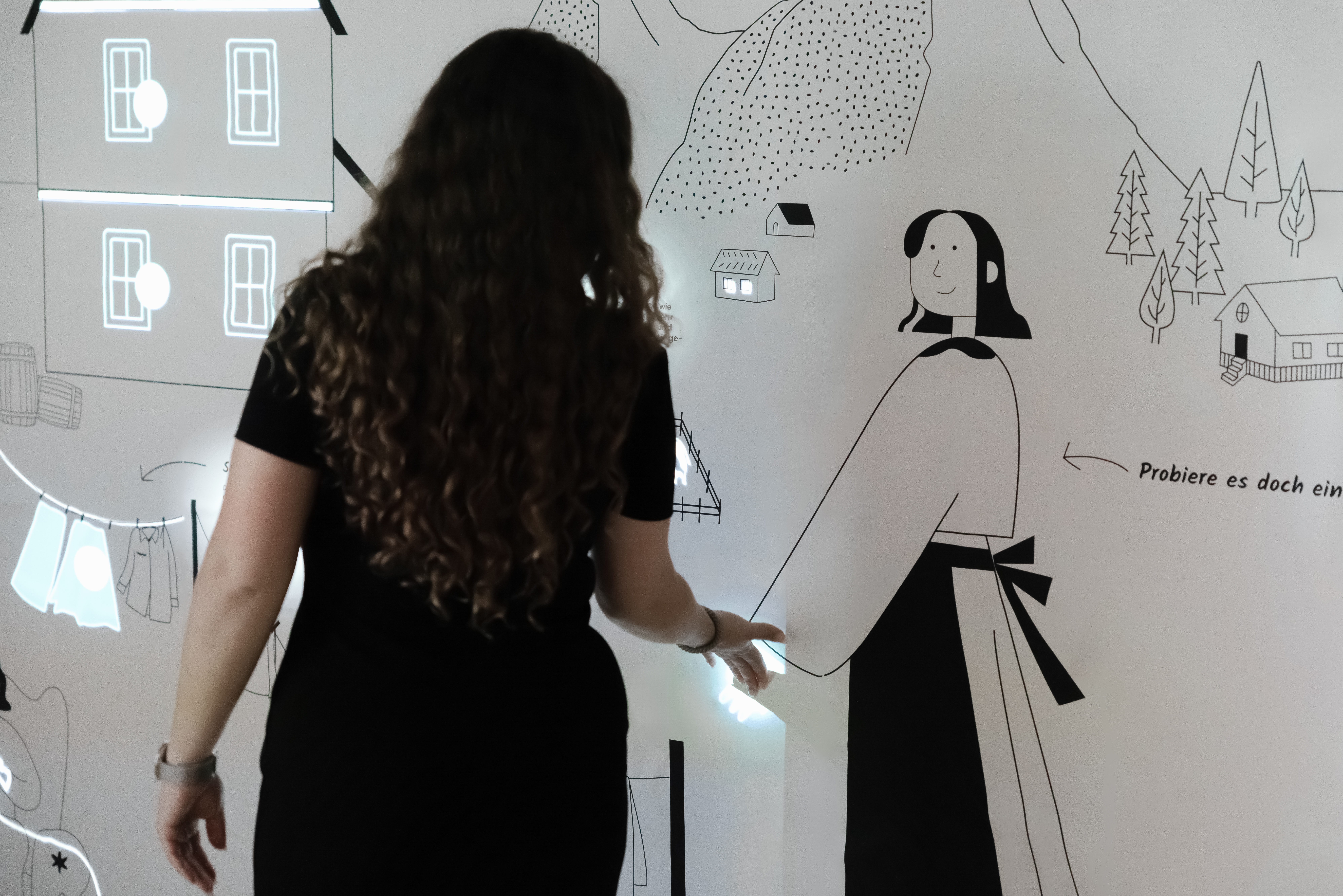
Illustration
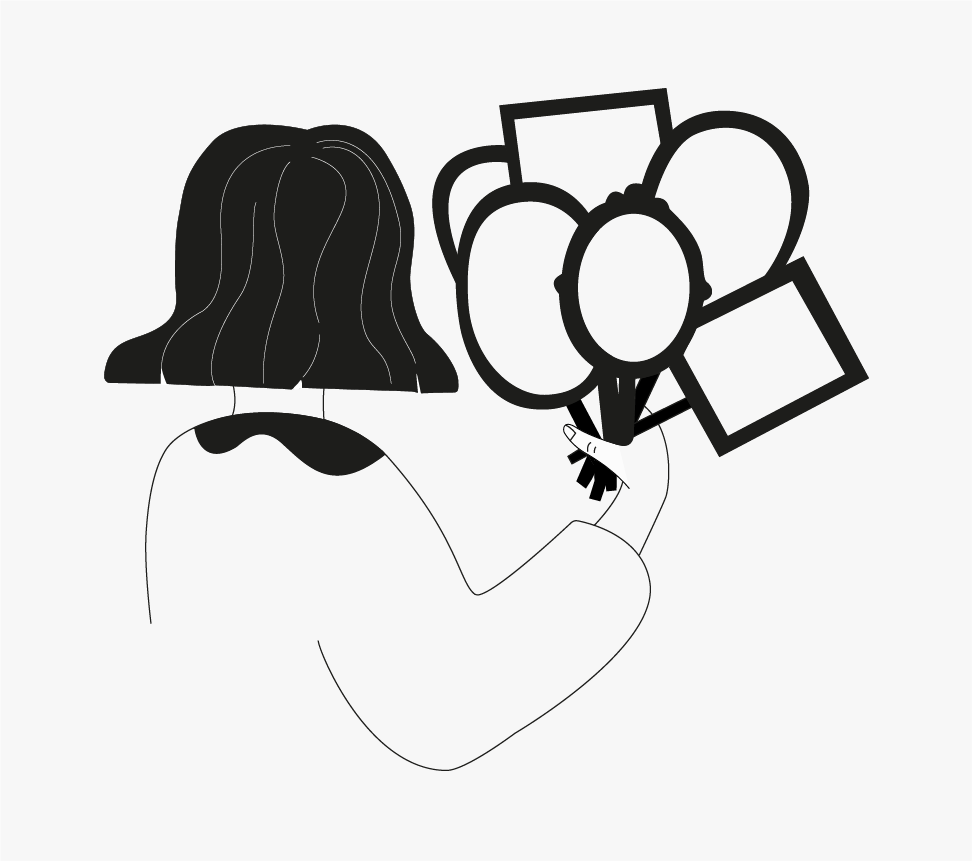
To emphasize Marianne’s story, we developed a distinct illustration style featuring hard edges and a clear, yet playful design. We chose a black-and-white aesthetic to create a strong, timeless visual language that keeps the focus on the story and its historical context. At the same time, playful shapes, expressive illustrations, and subtle details add personality, preventing the overall design from feeling too rigid or formal.
Reflexion
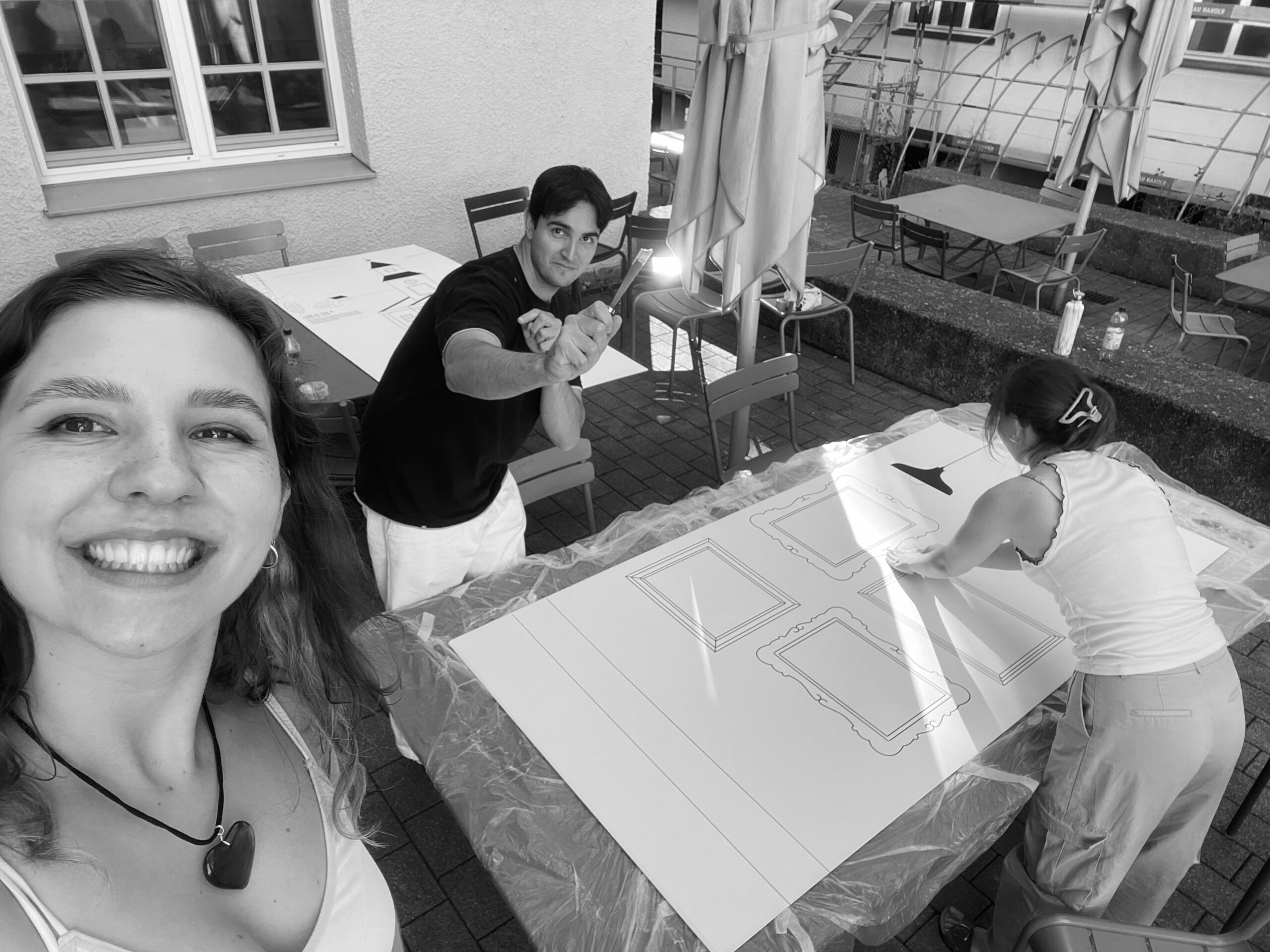
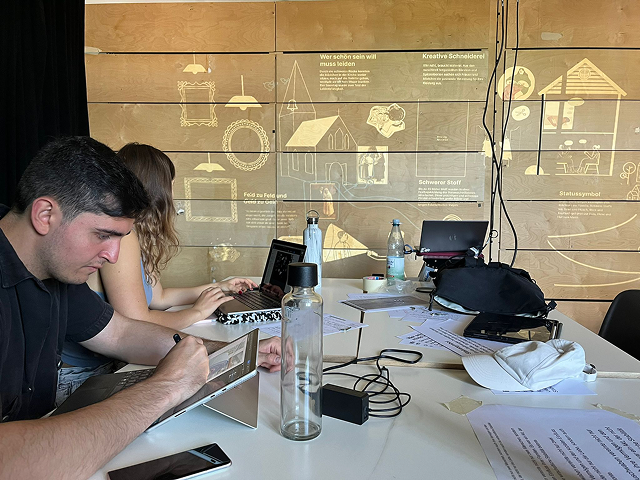
From life-size paper prototypes to the finished exhibit, each step contributed to a coherent overall solution. Using projections, we were able to refine the proportions of the content and typography.
It is valuable to test ideas with different materials at an early stage in order to determine which options work best in practice. Since we had limited time and a small budget for a wall almost three metres long, we chose a material that unfortunately did not perform optimally and developed air bubbles, which affected the visual quality of the final result. Nevertheless, many visitors enjoyed engaging with our exhibit.


Isabell Kaletka
© 2022 - 2026
All Rights Reserved
isabell.kaletka@icloud.com
LinkedIn